6-16-26 | Our Programs Partnerships Shared Stories Success Story Trips
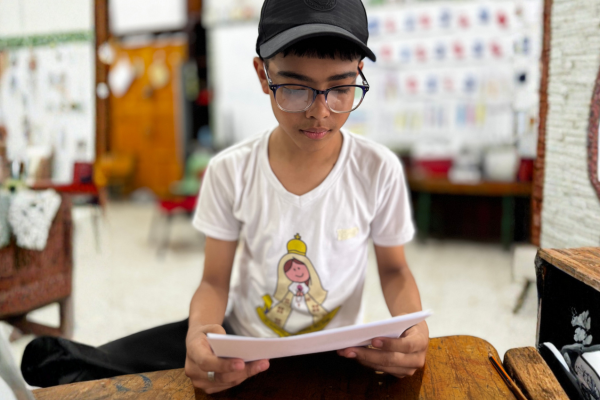
When educators began taking a closer look at Ezequiel’s performance in school, something did not add up. He was intelligent, engaged, and committed to his studies, yet he seemed to face increasing challenges in the classroom. He struggled to copy from the board, needed to sit very close to his work to complete assignments, and sometimes appeared unable to follow instructions that seemed simple for other children.
Those who knew him understood that he was capable and eager to learn. That raised an important question: what was really happening?
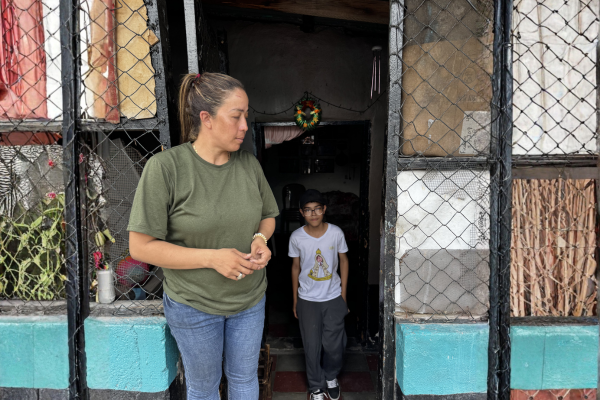
Ezequiel grew up in the Betania neighborhood of Tegucigalpa, Honduras, a community that faces many of the challenges common in vulnerable urban areas of the capital, including poverty, limited access to services, and recurring flooding during heavy rains. Since the age of three, he had participated in activities at Fundación ACOES’s community center, one of our Impact Partners, where he quickly became known as a responsible and respectful student who was always willing to help others. On several occasions, he was even asked to support younger children with their schoolwork. That is why his struggles were so puzzling.
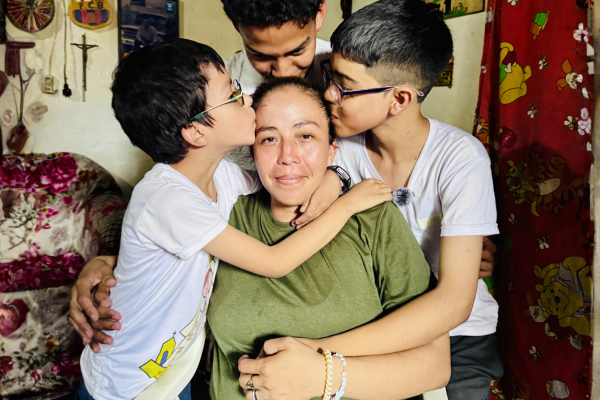
The story had begun years earlier. When Ezequiel was around four years old, his mother, Tania Zúñiga, noticed a small shadow in one of his eyes. Concerned, she began seeking medical help. Over the years, he received different treatments and was prescribed eye drops, but with limited resources for medical care, no one conducted the tests needed to understand what was truly affecting his vision. Like many families in Honduras, Tania faced significant barriers to accessing specialized healthcare. Nearly 8 in 10 Hondurans lack health insurance, making specialized evaluations and follow-up care difficult to obtain for many low-income families.
Later, another specialist diagnosed cataracts and prescribed glasses. For a time, the glasses seemed to help. However, the improvement was temporary. As Ezequiel grew older, the challenges returned, and by the age of eight, the glasses were no longer enough to help him function normally.
Tania continued searching for answers. As a single mother raising three children without stable employment, every medical appointment required significant sacrifice. Yet she remained determined to understand what was happening to her son.