9-2-25 | Our Programs Trips Volunteers
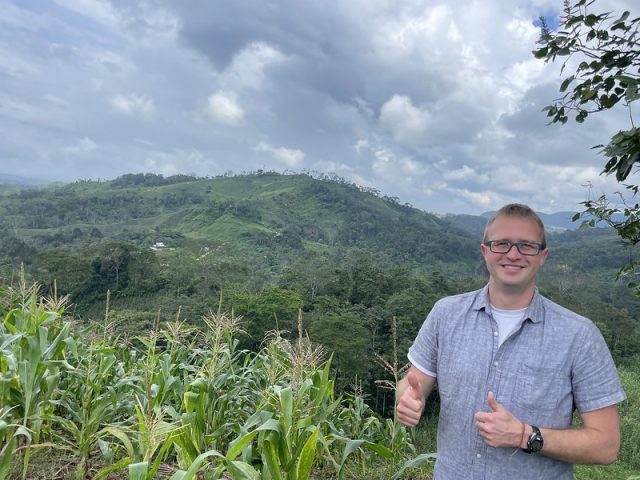 I traveled to Guatemala to visit Fabretto’s partners—nearly ten years after my first service trip to Nicaragua with Fabretto in college. This was my first time returning since 2018, and I was excited to reconnect with Kevin and see what the team had accomplished in reinventing Fabretto in Guatemala and Honduras.
2/12/25
At my breakfast table in the hotel, I enjoyed the diverse and random collection of humanity that gathers in Central America. I felt I was supposed to be here.
I met Mynor from Seeds for Progress, a Fabretto partner. During our meeting, he began to share the challenges this small country faces: 22 indigenous cultures and 25 languages—how can one produce educational material in 25 languages or create a curriculum that integrates each culture while educating to a common standard?
We traveled to Esquipulas to observe a teacher training. I was excited, having attended many such trainings during my years as a high school teacher at La Lumiere.
During a break, one of the facilitators explained that the training focused on implementing a lesson structure that was both predictable and engaging for students. I was impressed by how facilitators had created a space where teachers were open and receptive to new ideas—ideas not unlike the ones I encountered at La Lumiere. I was energized.
At dinner, I shared my excitement about the similarities between the techniques I used and the ones presented at the training. I was then invited to give a presentation the next day about these parallels.
2/13/25
Today Mynor and I visited the construction site of a classroom in the community of El Zapotlito, the home of one of the teachers in the training. This was the teacher’s first time working in the community.
I recognized many of the challenges I had also observed in Nicaragua—heavy rains, limited labor. The construction was progressing slowly. Mynor listened carefully to the foreman’s struggles and motivated him to complete the project in time for the school year.
Back in the teacher training, I explained how the lesson structure being taught mirrored the progression expected from our flight students when I was a flight instructor, after I left La Lumiere. I recounted my fear the first time I encountered mountain turbulence—and how, when I looked over, my flying partner was peacefully eating chicken. The facilitator smiled and said the support of this group could be like that captain eating chicken while I was still learning to fly.
The teachers were willing to be vulnerable, admit fears, support one another, grow, and take risks. I was excited for their students.
Goodbyes were bittersweet. On the way to Antigua, Mynor and I discussed how our networks could work together to find resources for SEEDs.
2/14/25
After breakfast, I climbed up to Cerro de la Cruz (Hill of the Cross), where three simple crosses overlooked the city and the volcano beyond. Families enjoyed the day, tourists took pictures, and local vendors sold raspados (snow cones) and fresh fruit.
I ventured beyond the official trail and ended up exploring the ruins of an imposing old monastery. Later, I wandered through the city center—colorful shops, art galleries, restaurants, and more ruins—where businesses operated inside centuries-old buildings, creating a striking blend of old and new.
2/15/25
I explored the impressive ruins of the Sanctuary of the Pilgrims. The Spaniards had reconstructed it three times—due to a mudslide and two earthquakes—showing their deep commitment to teaching the Faith.
That evening, I attended the Night of Candles, a community event that had come to Antigua. In the main plaza, lit with hundreds of candles, people danced to the music of a band and enjoyed fireworks at the end of the Noche de Velas.
2/16/25
I met the Fabretto executive team and we traveled to Cobán in Alta Verapaz, where I would shadow the team as they explored two new projects:
Project 1: Assess whether CaTec, an entrepreneurial and agricultural education program, could be implemented at the Xch’ool Xim cooperative in the Quiché community of Nimlajacoc.
Project 2: Discuss implementation of Manna Packs (fortified grains) at Talita Kumi, a nun-run girls’ school in Cobán.
2/17/25
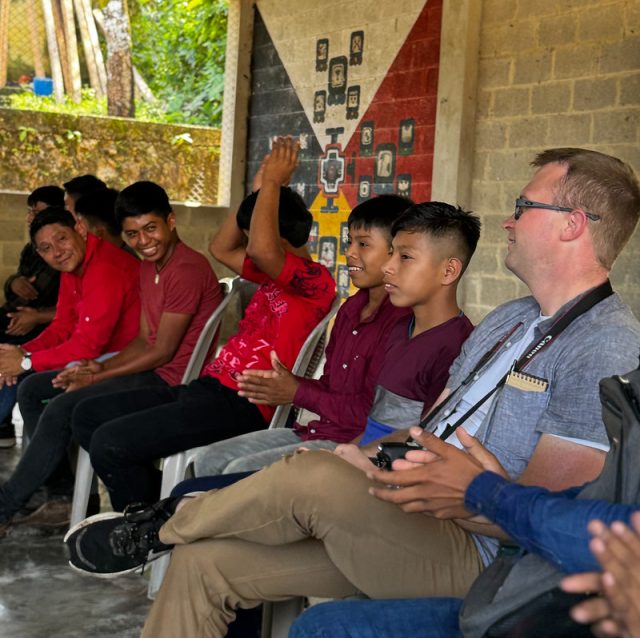
We met Freddy, leader of Xch’ool Xim, and drove to the Nimlajacoc community in Alta Verapaz. The cooperative comprised several buildings nestled in a dense forest. It featured a kitchen, a large auditorium/cafeteria, classrooms, and an impressive computer lab powered by solar panels and a stack of car batteries.
I knew the work here could open many doors for students in Guatemala. Half of our group, together with community elders, went to scout a plot of land for a student community garden, where CaTech’s innovative agricultural techniques would be taught. Freddy’s father, a founder of Xch’ool Xim, was among the elders.
CaTech’s vision includes families providing food for school lunches during the course, and students eventually starting family gardens using their newly acquired techniques.
The community leaders hosted us for a traditional lunch before we departed, and Xch’ool Xim’s leadership expressed deep gratitude for the partnership with Fabretto.
2/18/25
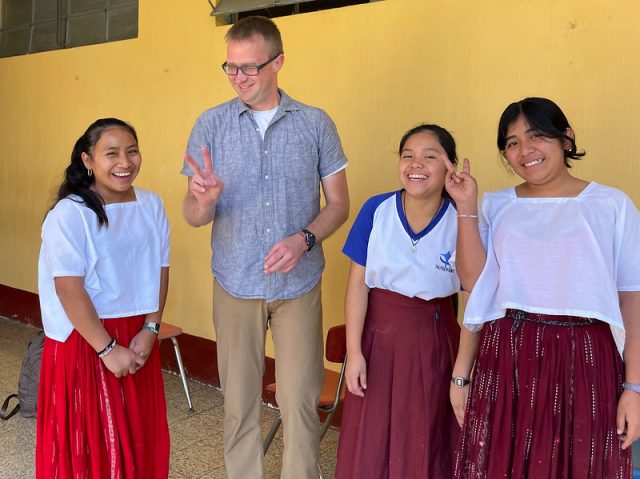
Our day at Talita Kumi, an all-girls boarding school, began with the director sharing the school’s mission and struggles. Enrollment was rising, but funding remained tight—families contributed very little financially.
Boarding was essential, allowing girls to escape traditional gender expectations in their indigenous communities. In the first classroom, the girls welcomed us with a song, introduced themselves, and asked thoughtful questions. They did not exhibit the usual shyness common among young rural women.
I was especially impressed by the school’s garden and kitchen. The garden teacher explained how the girls worked the soil to overcome gender stereotypes, learning they could achieve anything they set their minds to. The kitchen was designed to reflect traditional home environments, making it easier to transfer skills back into their communities.
In the afternoon, I joined a session between the Fabretto team and Xch’ool Xim leadership discussing CaTech’s features and potential implementation.
2/19/25
I was excited to return to Guatemala City and have dinner with Kevin and Manely. On the way, however, a protest over stalled road construction blocked the highway, turning a five-hour drive into a twelve-hour one. I witnessed how Guatemalans exercised their right to peaceful protest—a reminder of the challenges organizations face in places where reliable transportation is not guaranteed.
I missed dinner, but ended the day enjoying a glass of rum and reflecting on the trip with Kevin and Manely.
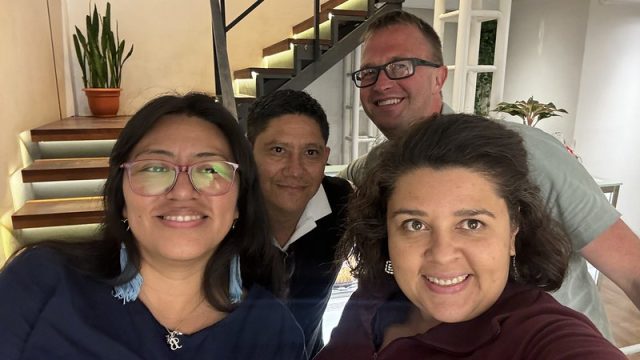
As I boarded my flight back to the U.S., I felt a deep sense of goodness for the lives transformed by Fabretto and its partners. I felt whole, having resumed my collaboration with an organization that shaped a key part of my journey. And above all, I felt gratitude—for the incredible people I met, and for the opportunity to contribute to the work done in Father Fabretto’s name.
Cristo reine. Siempre!
Tim Earls