9-12-25 | Partnerships Trips Volunteers
Coffee sustains life in Honduras. It is the country’s leading agricultural export and a source of livelihood for hundreds of thousands of smallholder families. Yet, as international markets adopt new sustainability requirements, the future of coffee production in Honduras increasingly depends on a new type of skilled labor: the digital collection and management of location data.
The European Union Deforestation Regulation (EUDR) now requires exporters to provide precise land information to verify that agricultural products are not linked to deforestation. For Honduras, where 50% of coffee exports are destined for the EU, meeting this standard is essential for sustaining access to one of its most important markets. This demonstrates a pressing need for individuals with digital data collection abilities, and a unique opportunity for youth in Honduras.
 From Research to Community Action
After submitting my undergraduate thesis on the impacts of this regulation and the challenges smallholder farmers face in collecting this data, I spent time volunteering with Fabretto to prepare young people to lead evidence collection in their own communities. Through CaTec, Fabretto’s technical training program, and in collaboration with the International Center for Tropical Agriculture – CIAT, I worked with ACOES’ local facilitators and youth to design a course that introduced practical skills in GPS data collection, digital traceability, and broader awareness of coffee markets. The primary objective was to strengthen students’ technical abilities while empowering them to support the farmers whose crops sustain their local economies.
The work began with visits to coffee-producing communities such as El Rifle, Santa Elana Mogola, where Fabretto already runs agricultural education programs. Speaking with youth and facilitators helped me understand their experiences with coffee farming and assess their existing technical skills. These conversations guided how the course could be structured so that students felt confident using digital tools and recognized their relevance for family and community farms.
Building Digital Skills in Coffee Communities
With these insights, we created a curriculum introducing the fundamentals of surveying, GPS use, and digital mapping through clear, step-by-step lessons. Importantly, the curriculum connected these technical skills to the bigger picture: sustaining market access and ensuring the long-term resilience of Honduran coffee.
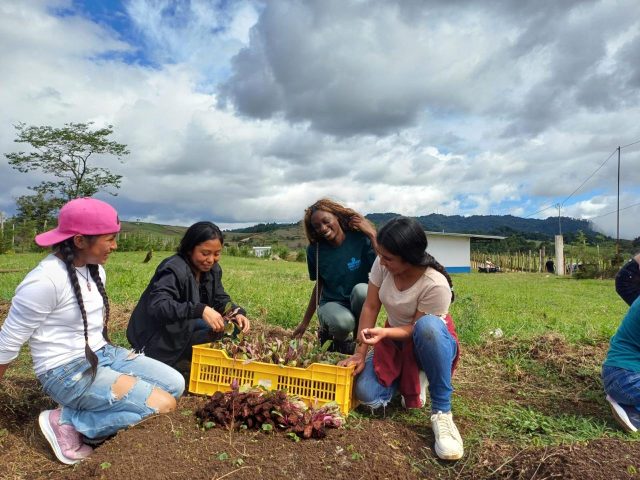
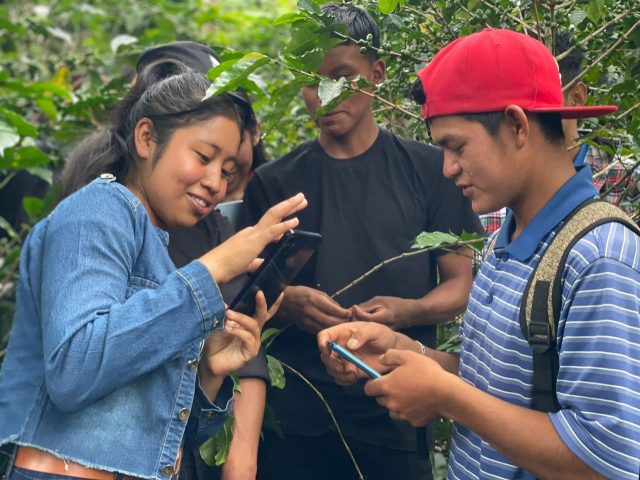
We piloted the training with around twenty students in Mogola. Over two days, they combined classroom learning with hands-on fieldwork, using phones and digital platforms to map coffee plots and record traceability data. Many visited their own family farms to practice geo-collection, tying their new skills directly to daily life. This practical application fostered excitement and ownership; aligned with CapTec’s objectives, students were building knowledge their families and communities could immediately use.
Ultimately, the pilot demonstrated how quickly students could grasp and apply these tools, as well as the potential for youth to engage meaningfully with a changing international market landscape. By learning to collect and manage data, these young people gain skills that make them valuable to their communities, responsive to international markets, and active participants in building a sustainable future for Honduran coffee.
If you want to contribute to this work: Donate here
.